The plastic now occupies a central place in industry thanks to a unique combination of lightness, chemical resistance, insulating properties, and a wide operating temperature range.
This adaptability explains the widespread adoption of plastic materials in demanding sectors such as automotive, aerospace, medical, electronics, or food industry.
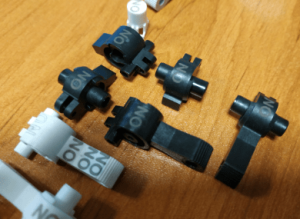
The plastic exhibits variable thermal and mechanical behaviors that directly influence permanent marking: depending on the polymer, its formulation, and the marking technology used, the result can appear as darkening, whitening, surface modification, or slight relief marking. These effects mainly result from thermal or structural interaction with the material, rather than material removal comparable to mechanical engraving.
The diversity of plastic formulations, as well as the presence of additives, pigments, or fillers, determines the contrast achieved and the mechanical resistance of the marking. This variability requires precise adjustment of marking parameters and careful selection of technologies to ensure readable, durable marking that meets industrial requirements.
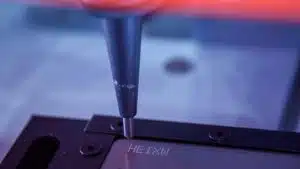
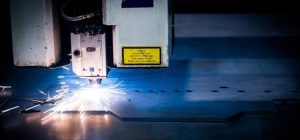
SIC MARKING offers several permanent marking technologies that can be applied to industrial plastics, mainly laser marking and, in some cases, micro-percussion technology on rigid and thick plastics.
Each plastic marking solution is selected based on the type of polymer, its rigidity, thermal sensitivity, and pigmentation to ensure readable, durable marking that meets industrial requirements. It is essential to adjust the marking technology and parameters according to these criteria to avoid the risk of thermal deformation or material degradation.
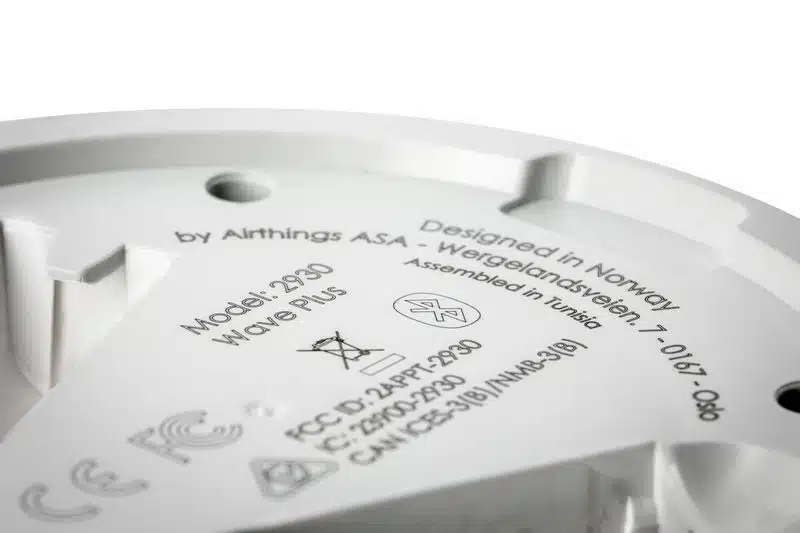
The choice of a plastic marking technology is based on a combined analysis of the polymer composition, its hardness, thermal sensitivity, the presence of pigments or additives, as well as the final use of the part. Each criterion must be considered to determine the most suitable marking method, taking into account functional, aesthetic, and durability requirements of the plastic part.
These parameters help determine whether laser marking is the most appropriate solution, or if, in more specific cases, micro-percussion can be considered. The choice of technology must prioritize readability and long-term performance.
The variability of plastics directly affects their marking behavior. The polymer structure (amorphous or semi-crystalline), characteristic temperatures (Tm / Tg), and the presence of fillers or pigments all modify both the absorption of laser wavelengths and thermal dissipation. For example, amorphous plastics, such as polystyrene (PS), generally interact better with certain laser wavelengths, while semi-crystalline plastics, such as polypropylene (PP), require specific settings or the use of additives to achieve sufficient contrast without excessive thermal buildup.
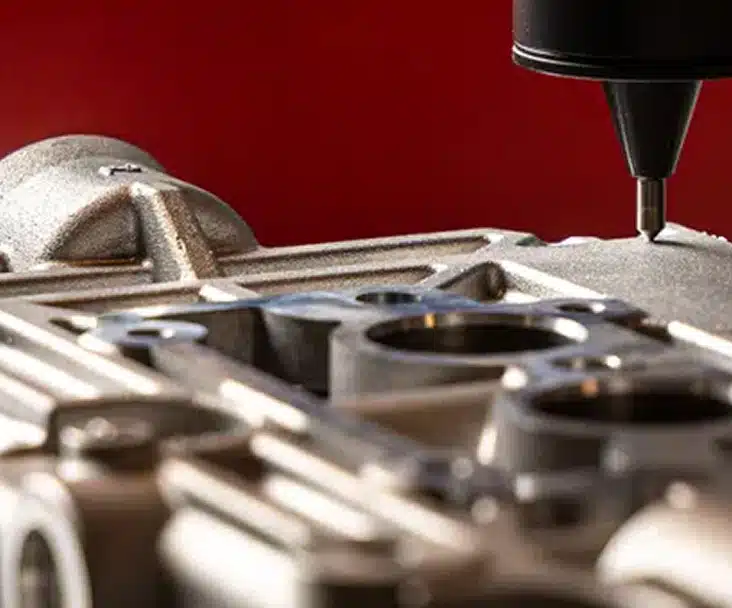
Rigid plastics (ABS, PC, PA, POM) can, under well-controlled configurations, support micro-percussion marking when the part’s geometry, thickness, and functional constraints allow. However, precise adjustment of the impact energy is necessary.
Conversely, soft or semi-soft plastics (PP, HDPE, TPE, TPU) generally require the use of laser marking due to their low rigidity and sensitivity to mechanical stress. The laser then allows for contactless marking, provided the energy is properly adjusted to control the thermal impact.
Plastic Hardness and Rigidity
Thermal Sensitivity of Polymers
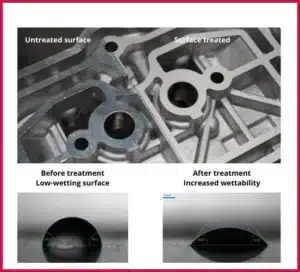
Impact of Pigments and Additives on Plastic Marking
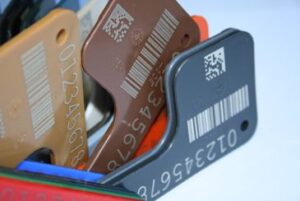
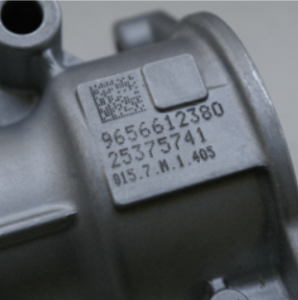
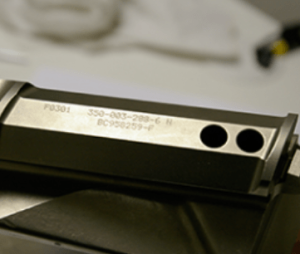
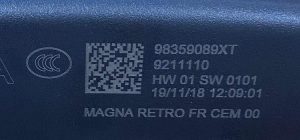
Permanent plastic marking includes DataMatrix, QR codes, barcodes, serial numbers, logos, and functional markings intended for identification, traceability, and regulatory compliance of industrial parts.
The choice of plastic marking technology – mainly laser marking, or occasionally micro-percussion – depends on the polymer type, required fineness, and expected marking durability.
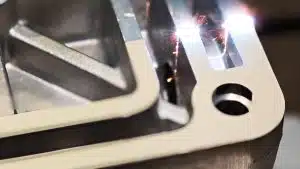
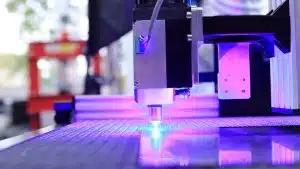
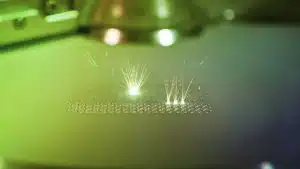
Laser marking of plastic is generally preferred for its precision, repeatability, and compatibility with industrial traceability. It allows clear and permanent markings on a wide range of rigid plastics and semi-rigid plastics, while preserving the material’s mechanical properties, making it the reference solution for applications requiring high resolution and reliable automatic reading.
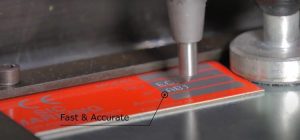
Micro-percussion is reserved for rigid and engineering plastics, such as certain PC, PA, or heavily filled polymers, when the part thickness and mechanical constraints allow. It is mainly used for simple alphanumeric markings and DataMatrix when marking depth is a priority criterion.
These plastic marking solutions ensure reliable traceability, regulatory compliance, and marking durability, even in demanding industrial environments. In sensitive medical or industrial applications, the technology choice primarily aims to guarantee marking legibility without affecting the part’s functionality.
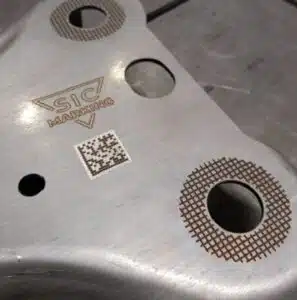
The choice between DataMatrix DPM, QR codes, 1D barcodes, serial numbers, logos, or graduations depends on the required information density and automatic reading constraints. DataMatrix DPM codes are generally preferred for industrial traceability because they can store a large amount of information in a small space while ensuring reliable reading by industrial vision systems.
Laser marking is favored for the majority of industrial plastic applications due to its flexibility, precision, and ability to adapt to complex geometries, while providing uniform and durable results.
In mass production, markings often combine a machine-readable code with visually readable information, for example a DataMatrix paired with an 8 to 12-character alphanumeric identifier. Typical dimensions of DPM codes on plastic generally range over a few millimeters, depending on the laser technology used, the contrast achieved, and the application sector requirements (automotive, medical, aerospace, logistics).
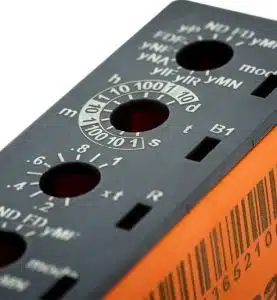
Logos and pictograms require precise laser parameter settings to achieve a clear, uniform, and durable result. Fiber laser marking is preferred for its precision and repeatability, particularly on materials such as ABS or PC, which allow finely defined and visually distinct markings compatible with industrial requirements.
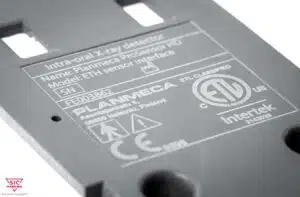
Contrast and surface modification parameters are adjusted considering regulatory requirements (e.g., CE marking or safety symbols) and the desired aesthetics, especially when the plastic part is painted or surface-treated. It is essential that the marking remains legible over time without altering the visual appearance or functional properties of the part.
For components such as dashboards or electronic enclosures, the chosen marking is generally non-invasive while providing sufficient resistance to operational stresses. These markings are validated through abrasion, chemical, and thermal cycle tests, in accordance with the requirements of the automotive, appliance, or sporting goods sectors.
The choice of plastic part marking is based on several complementary criteria:
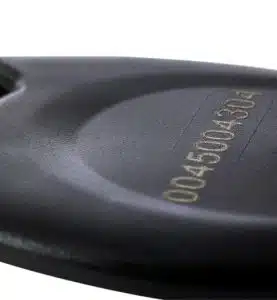
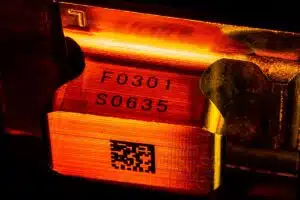
Alphanumeric serial numbers ensure unique identification and traceability of plastic products. They allow each part to be tracked accurately throughout its lifecycle, from manufacturing to use and maintenance operations, providing a reliable link to production data.
Sequences of 6 to 12 characters are commonly used to optimize the balance between legibility, marking size, and identification capacity. This length provides sufficient traceability while ensuring a readable marking compatible with the dimensional constraints of plastic parts.
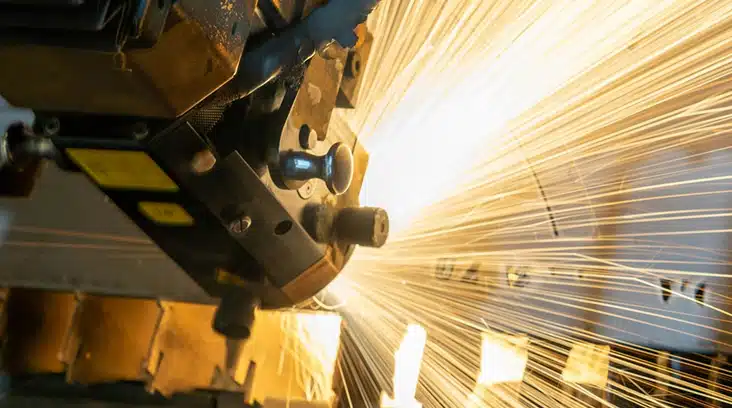
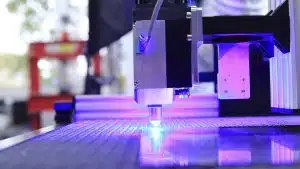
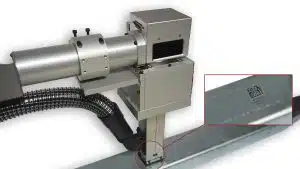
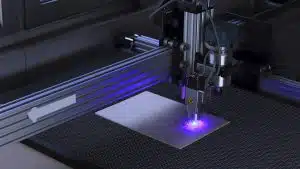
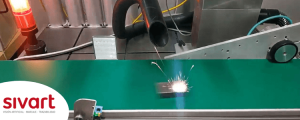
Fiber laser marking is a widely used solution for mass production due to its precision, speed, and repeatability. On compatible plastics, it allows permanent, contactless markings while preserving the part’s mechanical properties, making it particularly suitable for automated industrial environments.
In the automotive sector, serial numbers are used for recall management, warranties, and product compliance. Each identifier is linked to a database containing information such as batch number, manufacturing date, or production station, enabling rapid traceability of each part and securing the traceability chain.
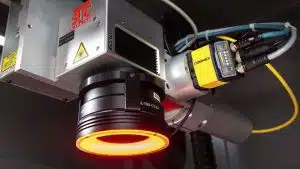
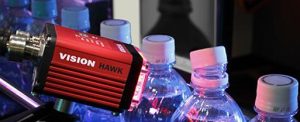
Optical inspection systems verify the presence and legibility of the marking online at high speed, handling several hundred parts per minute depending on the complexity of the marking and process. These automated checks ensure that markings meet quality requirements and are immediately usable for automatic reading and production tracking.
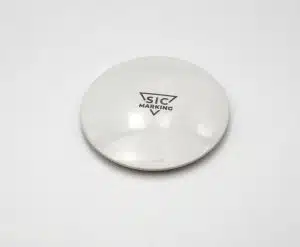
Logos and pictograms require precise laser beam settings to achieve a clear and durable result. Fiber laser marking is preferred for its precision and premium appearance, particularly on materials like ABS and PC, which allow finely detailed and visually distinct markings.
Depth and contrast parameters are adjusted considering regulatory requirements (e.g., CE marking, safety symbols) and the desired aesthetics, especially when the plastic part is painted or surface-treated. It is crucial that the marking not only complies with standards but also suits the part’s aesthetic finish to ensure legibility and marking longevity.
On components such as dashboards or electronic enclosures, the selected marking is generally non-invasive while providing sufficient resistance to environmental conditions.
These markings are validated through abrasion, solvent, and thermal cycle tests, specific to sectors such as automotive, appliances, or sporting equipment.
The choice of plastic part marking is based on several complementary criteria:
In many industrial sectors, plastic part marking today goes beyond simple visual identification to become a central lever for product management and governance. It ensures continuity of information throughout the lifecycle of the plastic part, from production to use and end-of-life, by linking a DataMatrix code or QR code to a database containing manufacturing history, batch numbers, operator information, and quality parameters.
Permanent marking on plastic parts is also a key tool for regulatory compliance where standards require it. It meets UDI requirements in the medical sector, DataMatrix marking specifications used in aerospace, and requirements from automotive manufacturers for component identification and traceability, including in constrained environments.
Finally, permanent marking helps improve logistical and operational efficiency. In warehouses and on customer sites, machine-readable marking facilitates flow management, reduces picking errors, and speeds up maintenance and part tracking throughout their use.

Micro-percussion can be implemented when the part’s thickness and function allow it, to achieve a durable and legible alphanumeric marking over time, without the requirement for standardized automatic reading.


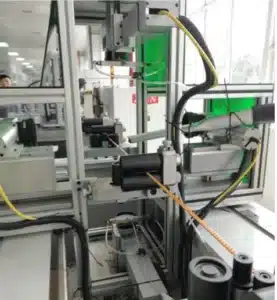
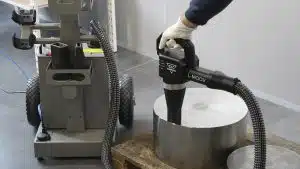
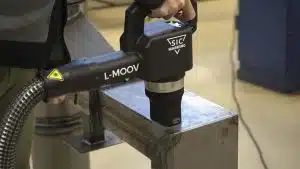
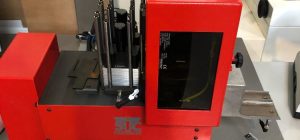
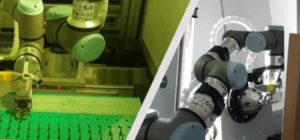
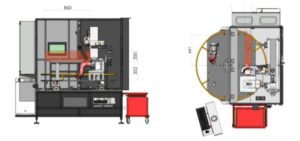
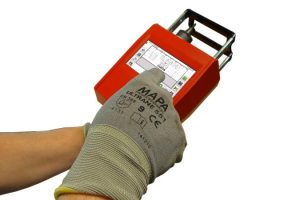
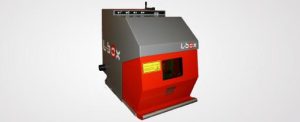
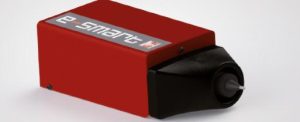
Discover our flagship laser marking, micro-percussion, or scribing equipment, including our Portable Machines, Integrable Modules for production lines, and Standalone Marking Stations.
Contact Us
Need information?
Get in touch with one of our experts!